Modern Outdoor Patio Design Ideas for Contemporary Outdoor Living
Modern outdoor patio design has evolved far beyond simple seating areas. Today, it represents a seamless blend of architecture, landscape design, functionality, and technology. Homeowners increasingly view patios as extensions of their interior living spaces, designed to support relaxation, entertainment, and daily activities in a visually cohesive and highly practical way.
At its core, outdoor patio modern design focuses on clean lines, intentional layouts, durable materials, and thoughtful integration with the surrounding environment. Rather than overcrowding the space with decorative elements, modern design emphasizes balance, negative space, and purposeful features that enhance both aesthetics and usability. This approach results in patios that feel timeless, adaptable, and aligned with contemporary lifestyles.
Core Principles of Modern Outdoor Patio Design
Minimalist Structure and Visual Clarity
Modern outdoor patios prioritize simplicity in structure while maintaining a strong architectural presence. Straight edges, geometric forms, and uncluttered layouts define this style. Furniture placement is deliberate, leaving room for movement and visual breathing space rather than filling every square foot.
This minimalist approach improves functionality by creating clear zones for seating, dining, or lounging. It also enhances visual appeal by allowing materials, textures, and landscaping to stand out without competing for attention. The result is a patio that feels organized, calming, and intentionally designed rather than improvised.
Seamless Indoor–Outdoor Connection
A defining characteristic of outdoor patio modern design is its connection to interior living spaces. Large sliding doors, folding glass walls, or consistent flooring materials help blur the boundary between indoors and outdoors. This continuity makes the patio feel like a natural extension of the home rather than a separate area.
When indoor and outdoor design languages align, homeowners experience greater usability throughout the year. The patio becomes suitable for morning coffee, remote work, family meals, or evening gatherings, reinforcing its role as an essential living environment rather than a seasonal add-on.
Materials That Define Modern Outdoor Patios
Concrete, Porcelain, and Composite Surfaces
Concrete remains one of the most popular materials in modern patio design due to its versatility and durability. It can be poured, stamped, polished, or tinted to achieve different finishes while maintaining a sleek, contemporary appearance. Its neutral tone provides a strong foundation for furniture and landscaping accents.
Porcelain pavers and composite decking are also widely used in modern outdoor patios. These materials offer high resistance to moisture, temperature changes, and fading. Their consistent textures and clean finishes support the modern aesthetic while reducing long-term maintenance requirements.
Metal, Glass, and Natural Wood Accents
Metal elements such as aluminum, steel, or powder-coated iron are frequently incorporated into modern patio designs. They are used for pergolas, railings, furniture frames, and privacy screens, providing strength and a refined industrial touch.
Natural wood remains relevant in modern patios when used selectively. Instead of ornate detailing, modern designs favor smooth finishes, straight planks, and restrained tones. Glass is often added through railings or partitions to preserve open views while maintaining safety and spatial definition.
Smart Technology in Modern Outdoor Patio Design
Integrated Lighting Systems
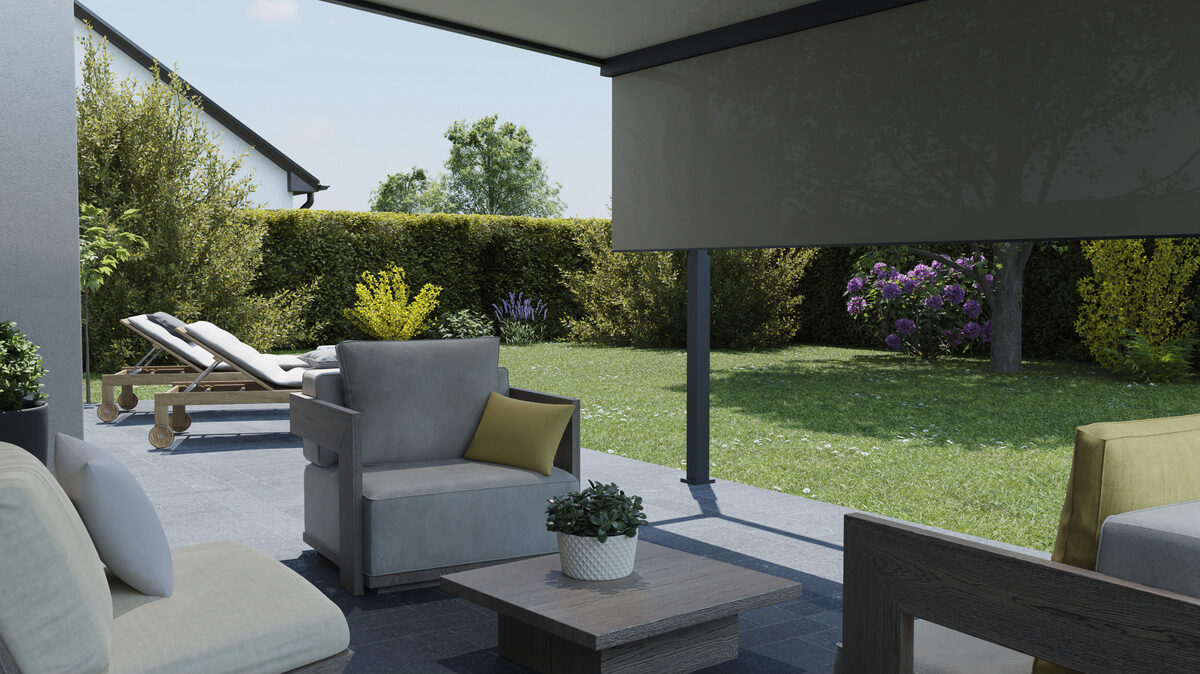
Modern outdoor patios increasingly rely on integrated lighting systems to enhance ambiance and usability after sunset. LED strip lighting, recessed floor lights, and architectural wall washers are commonly used to highlight pathways, seating areas, and structural features.
These systems improve safety while creating a layered lighting effect that complements the modern aesthetic. Smart controls allow homeowners to adjust brightness and lighting zones based on activity, whether hosting guests or enjoying a quiet evening outdoors.
Weather-Responsive Features
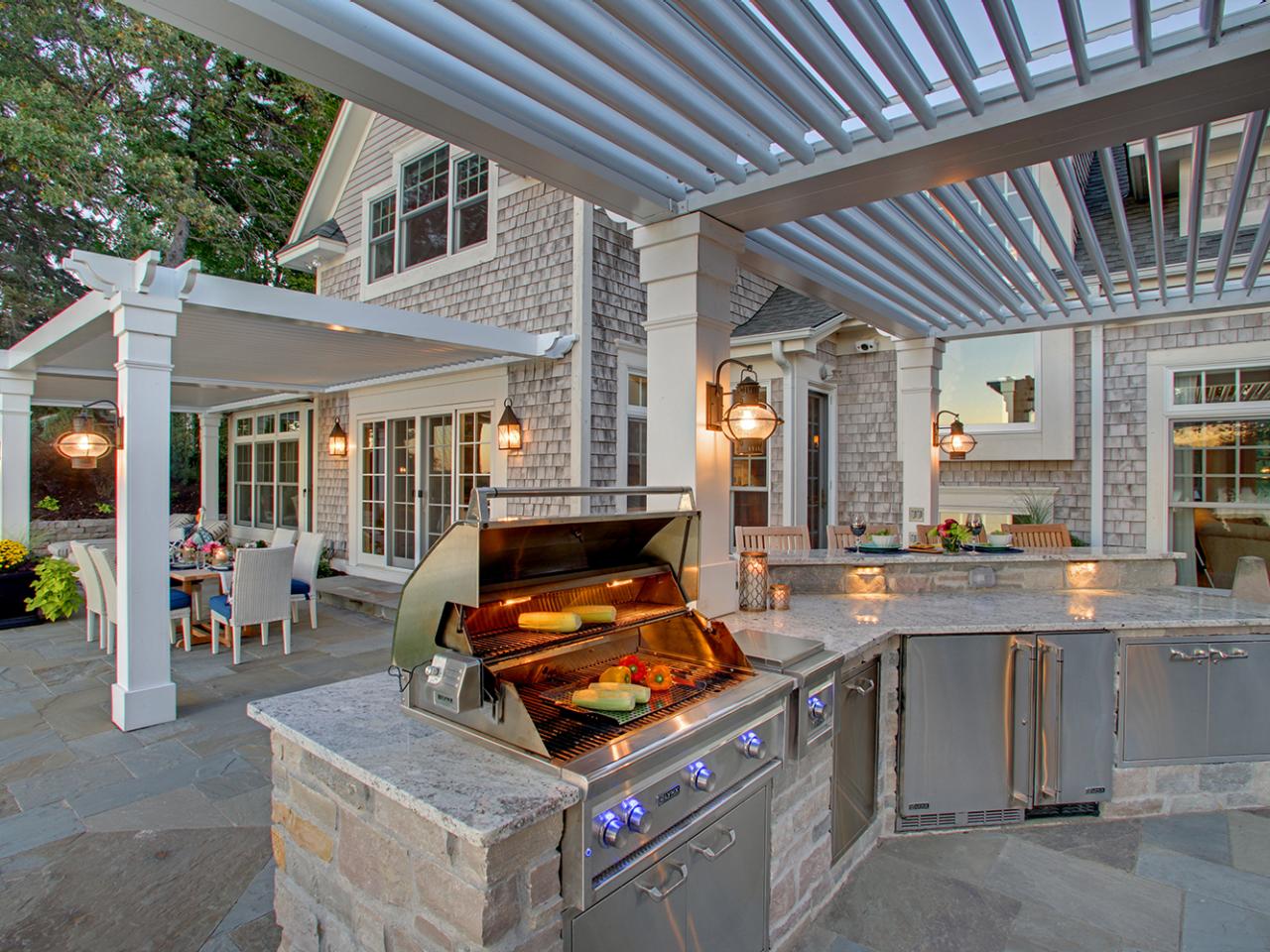
Technology plays a significant role in adapting outdoor patios to changing weather conditions. Automated pergolas with adjustable louvers can open or close based on sunlight, wind, or rain. Integrated sensors help protect furniture and ensure comfort without constant manual adjustment.
This level of automation transforms patios into reliable, all-weather spaces. Instead of being limited by climate unpredictability, homeowners can use their outdoor areas more frequently and with greater confidence throughout the year.
Functional Zoning in Modern Patio Layouts
Defined Activity Areas
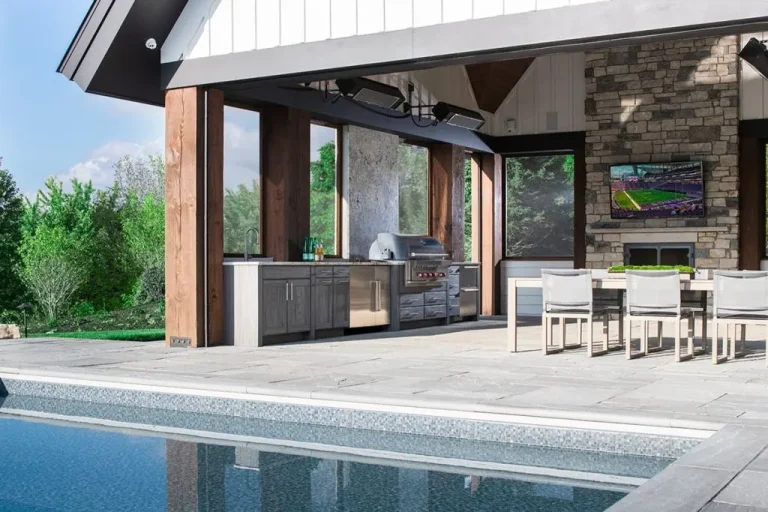
Modern outdoor patio design relies heavily on functional zoning. Rather than one large open area, the space is divided into clearly defined sections for lounging, dining, cooking, or recreation. These zones are created using furniture placement, changes in flooring material, or subtle elevation differences.
This layout approach improves usability by allowing multiple activities to occur simultaneously without interference. For example, a dining area can coexist with a lounge space while maintaining visual harmony and comfort for each function.
Flow and Accessibility
Effective patio layouts consider how people move through the space. Walkways are unobstructed, seating arrangements encourage conversation, and transitions between zones feel natural. This emphasis on flow enhances both safety and user experience.
Accessibility is also a growing consideration in modern patio design. Level surfaces, non-slip materials, and thoughtful spacing ensure the patio can be comfortably used by people of all ages and mobility levels.
Real-World Examples of Modern Outdoor Patio Design
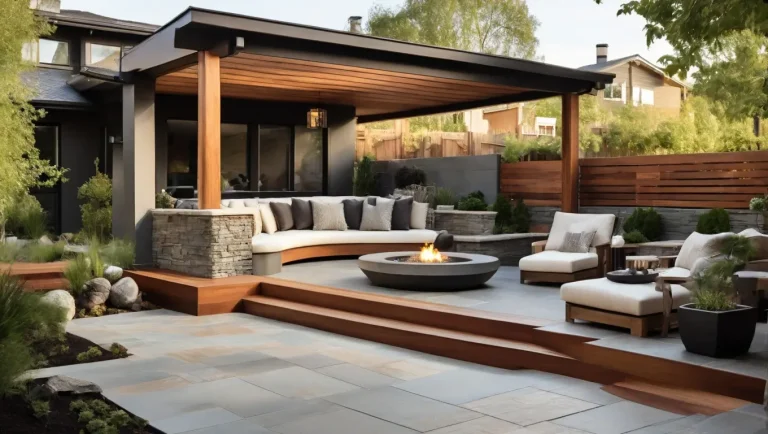
Concrete Lounge Patio with Built-In Seating
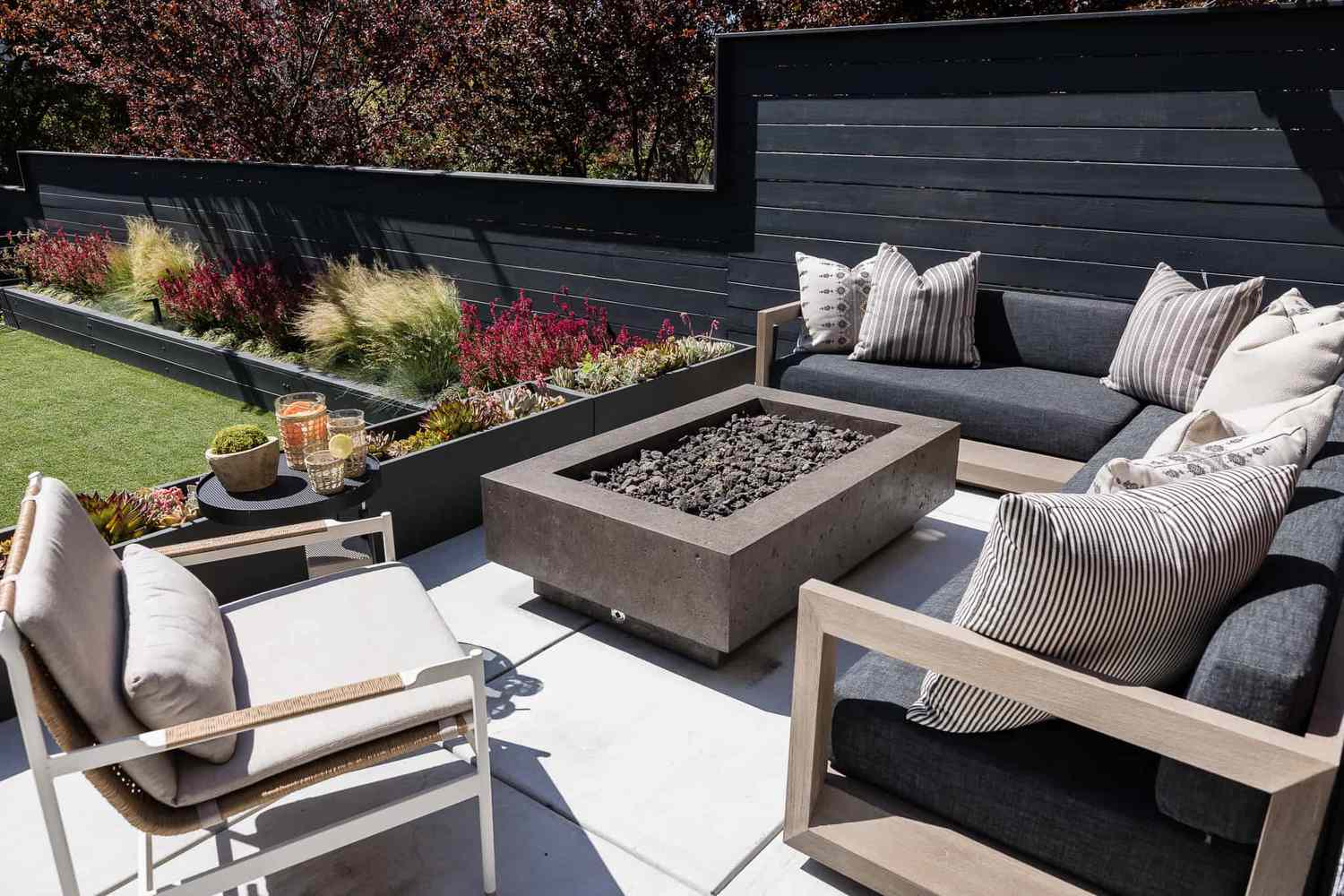
This type of patio features poured concrete flooring paired with built-in seating elements. The seating is often integrated into retaining walls or planters, creating a cohesive architectural look. Cushions and textiles are added for comfort while maintaining clean lines.
The relevance of this design lies in its durability and efficiency. Built-in seating reduces clutter, maximizes usable space, and provides long-lasting structure suitable for both private relaxation and social gatherings.
Pergola-Covered Dining Patio
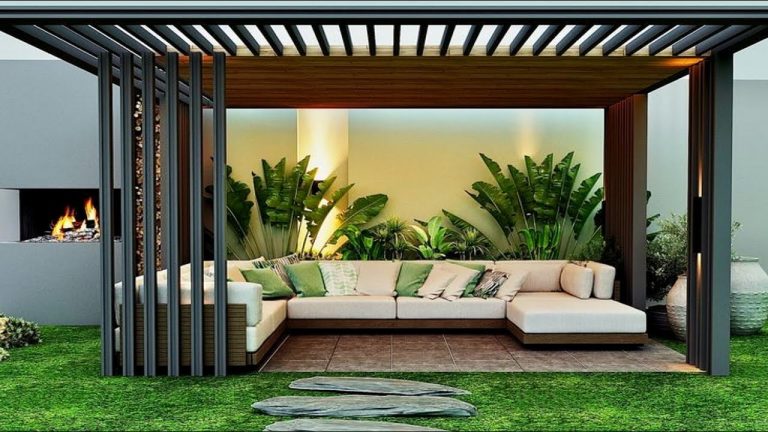
A pergola-covered patio provides partial shelter while preserving an open, airy feel. Modern pergolas often feature aluminum frames, adjustable louvers, and integrated lighting. Beneath the structure, a dining table and minimalist chairs create a refined outdoor eating area.
This design is ideal for homeowners who frequently entertain guests. It balances exposure to natural light with protection from harsh weather, making outdoor dining more comfortable and reliable.
Fire Feature Lounge Patio
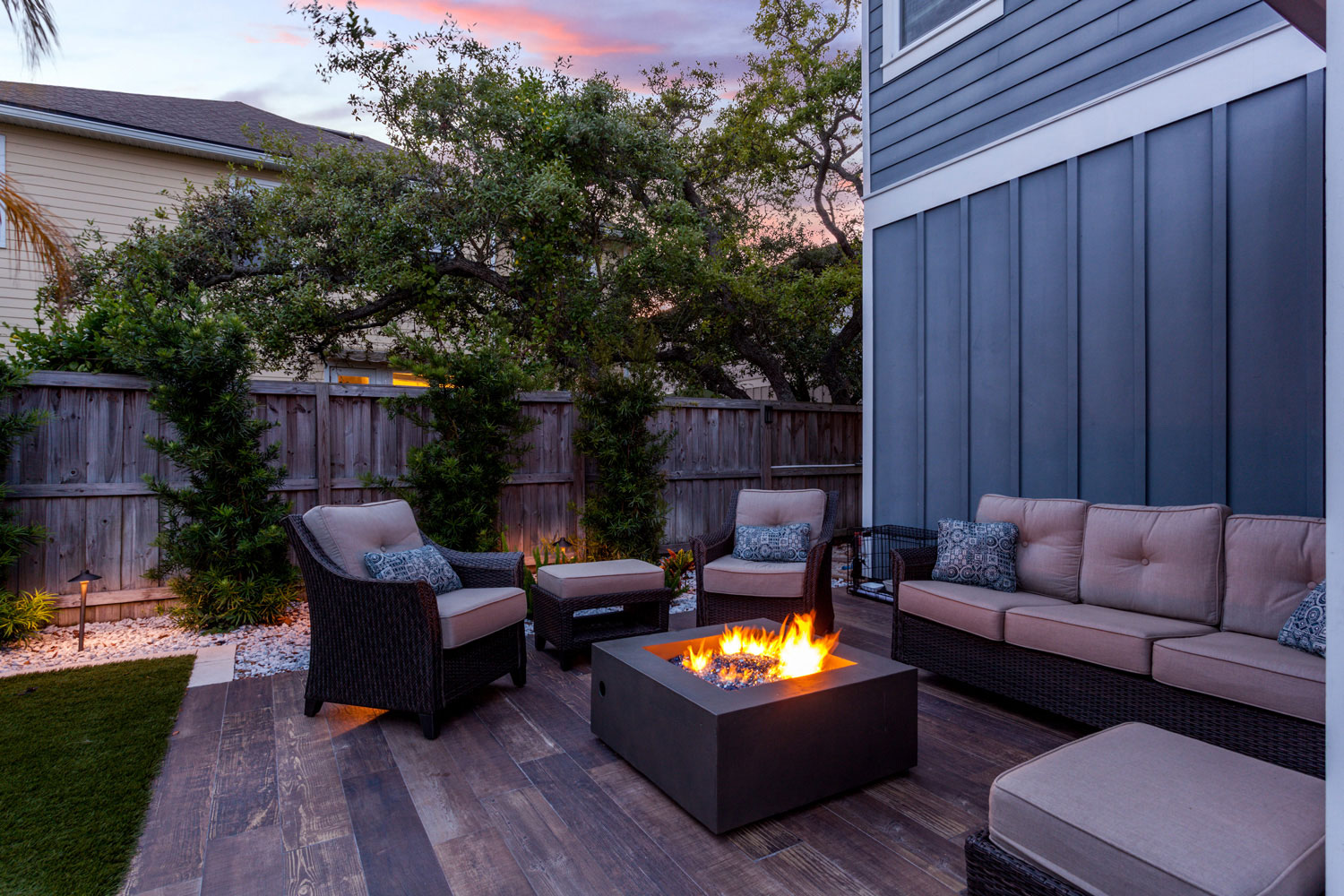
Modern fire pits are typically linear or circular with simple, geometric forms. They serve as both functional heating elements and visual focal points. Surrounded by low-profile seating, the fire feature anchors the patio and encourages social interaction.
The inclusion of a fire element extends patio usability into cooler seasons. It also enhances ambiance, making the space suitable for evening relaxation and intimate gatherings.
Multi-Level Modern Patio Design
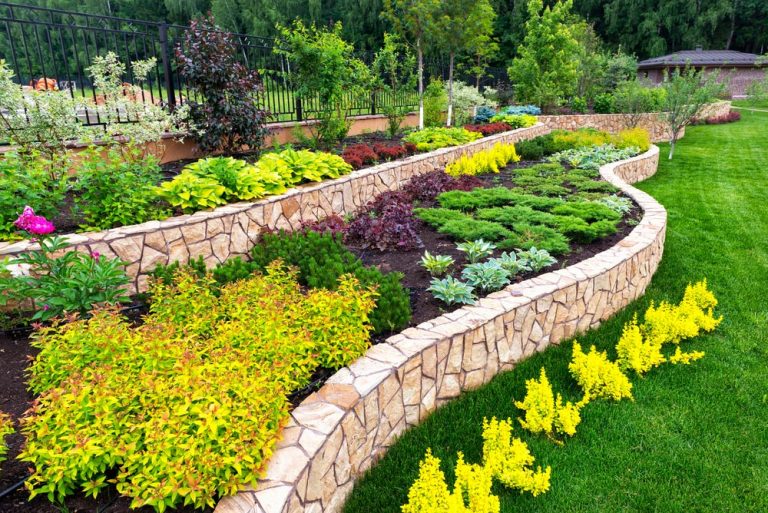
Multi-level patios use elevation changes to define different functional zones. Steps, platforms, or terraced layouts create visual interest while separating activities such as dining and lounging. Materials remain consistent to preserve a modern aesthetic.
This design is especially useful for sloped properties. It transforms challenging terrain into a visually dynamic and highly functional outdoor environment.
Practical Benefits of Modern Outdoor Patio Design
Enhanced Daily Living
A well-designed modern patio improves everyday quality of life by providing an additional space for relaxation, work, or social interaction. It encourages outdoor activity without sacrificing comfort or convenience.
By integrating shade, lighting, and comfortable seating, modern patios become usable throughout the day and across seasons. This versatility increases the overall value of the living environment.
Long-Term Durability and Low Maintenance
Modern patio designs prioritize materials and construction methods that withstand weather exposure and require minimal upkeep. Concrete, porcelain, and metal elements are selected for their longevity and resistance to wear.
This focus reduces long-term maintenance costs while preserving visual appeal. Homeowners benefit from a space that remains functional and attractive without constant repairs or updates.
Use Cases and Real-Life Problem Solving
Modern outdoor patio design addresses common challenges such as limited indoor space, lack of outdoor usability, and climate constraints. By extending living areas outdoors, homeowners gain functional square footage without major interior renovations.
In urban or suburban settings, modern patios also help create private retreats within compact properties. Thoughtful layouts, screening elements, and noise-reducing materials allow users to enjoy outdoor living even in densely populated environments.
Frequently Asked Questions
What makes a patio design “modern” rather than traditional?
Modern patio design focuses on clean lines, minimal ornamentation, functional layouts, and durable materials. Unlike traditional designs, it avoids excessive decoration and emphasizes purpose, balance, and simplicity.
Are modern outdoor patios suitable for small spaces?
Yes, modern design principles are highly adaptable to small patios. Minimalist layouts, built-in seating, and efficient zoning make even compact spaces functional and visually appealing without feeling crowded.
How does modern patio design improve long-term usability?
Modern patios are designed with durability, adaptability, and comfort in mind. Weather-resistant materials, integrated technology, and flexible layouts ensure the space remains useful across seasons and evolving lifestyle needs.