Modern Outdoor Kitchen Design In-Depth Guide to Features, Technology, and Practical Use
Modern outdoor kitchen design has evolved from a simple grill station into a fully functional extension of the home. Today’s outdoor kitchens combine architectural aesthetics, durable materials, smart technology, and thoughtful layouts that support cooking, entertaining, and relaxation. Homeowners are increasingly prioritizing outdoor living spaces that offer both luxury and practicality, making modern outdoor kitchen design one of the most sought-after backyard upgrades.
This comprehensive guide explores the core principles of modern outdoor kitchen design, including layout planning, materials, appliances, smart features, benefits of technology integration, and real-world examples. The goal is to provide deep informational insight into how these kitchens function, why they are useful, and what problems they solve in real-life scenarios.
Understanding Modern Outdoor Kitchen Design
Defining the Modern Outdoor Kitchen Concept
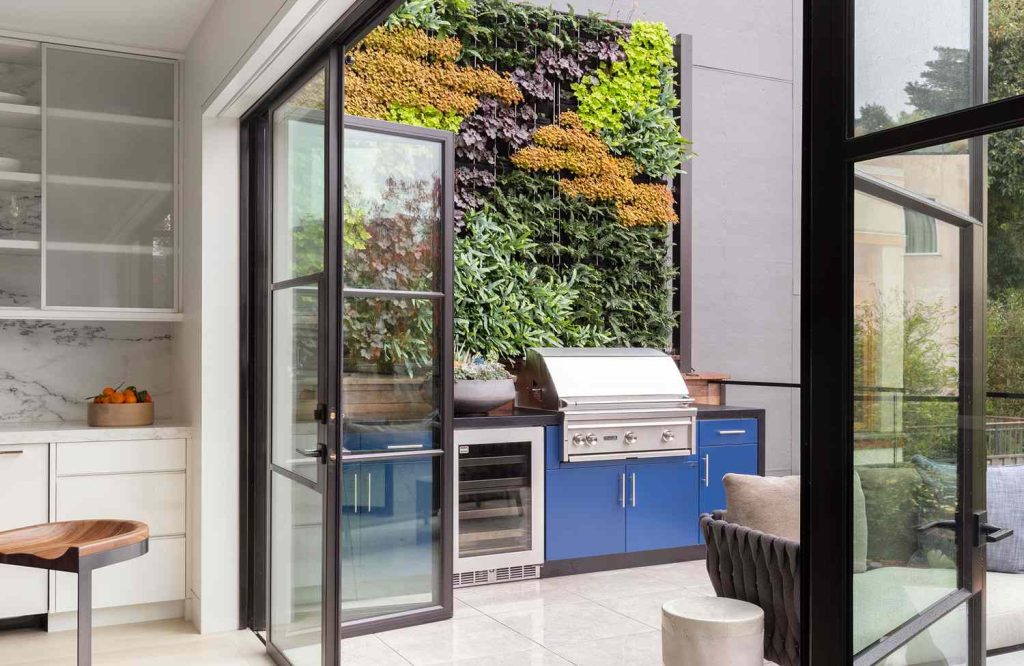
Modern outdoor kitchen design focuses on clean lines, minimal visual clutter, functional layouts, and seamless integration with the surrounding environment. Unlike traditional outdoor kitchens that often revolve around a standalone grill, modern designs prioritize complete cooking workflows, including food preparation, cooking, serving, and cleanup.
These kitchens are typically designed to feel like a continuation of the indoor kitchen, using similar materials, color palettes, and design language. Neutral tones, natural textures, and integrated appliances help create a cohesive aesthetic that blends architecture with nature.
From a functional standpoint, modern outdoor kitchens are engineered for year-round usability. Weather resistance, ventilation planning, and ergonomic layouts ensure that the space remains comfortable and efficient regardless of season or climate.
Core Principles Behind Modern Design
The foundation of modern outdoor kitchen design lies in simplicity and purpose. Every element is chosen not only for appearance but also for performance. Layouts are often based on the classic kitchen work triangle concept, adapted for outdoor conditions. This ensures efficient movement between cooking, prep, and storage areas.
Another principle is adaptability. Modern outdoor kitchens are often modular, allowing homeowners to expand or reconfigure the space over time. This flexibility supports changing lifestyle needs, from small family meals to large social gatherings.
Sustainability also plays a growing role. Energy-efficient appliances, eco-friendly materials, and water-saving fixtures align modern outdoor kitchen design with long-term environmental responsibility.
Layout Planning for Modern Outdoor Kitchens
Functional Zoning and Workflow
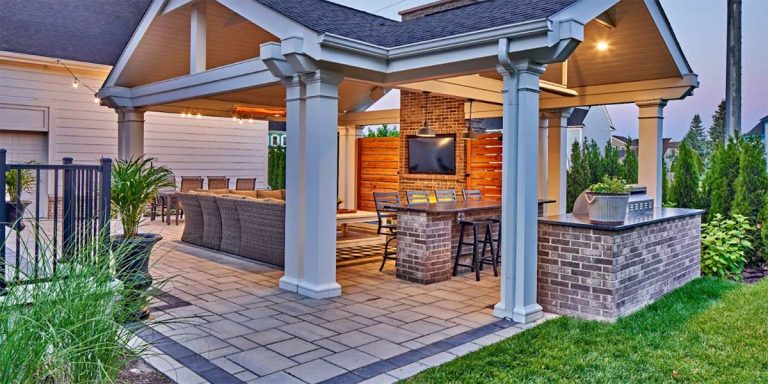
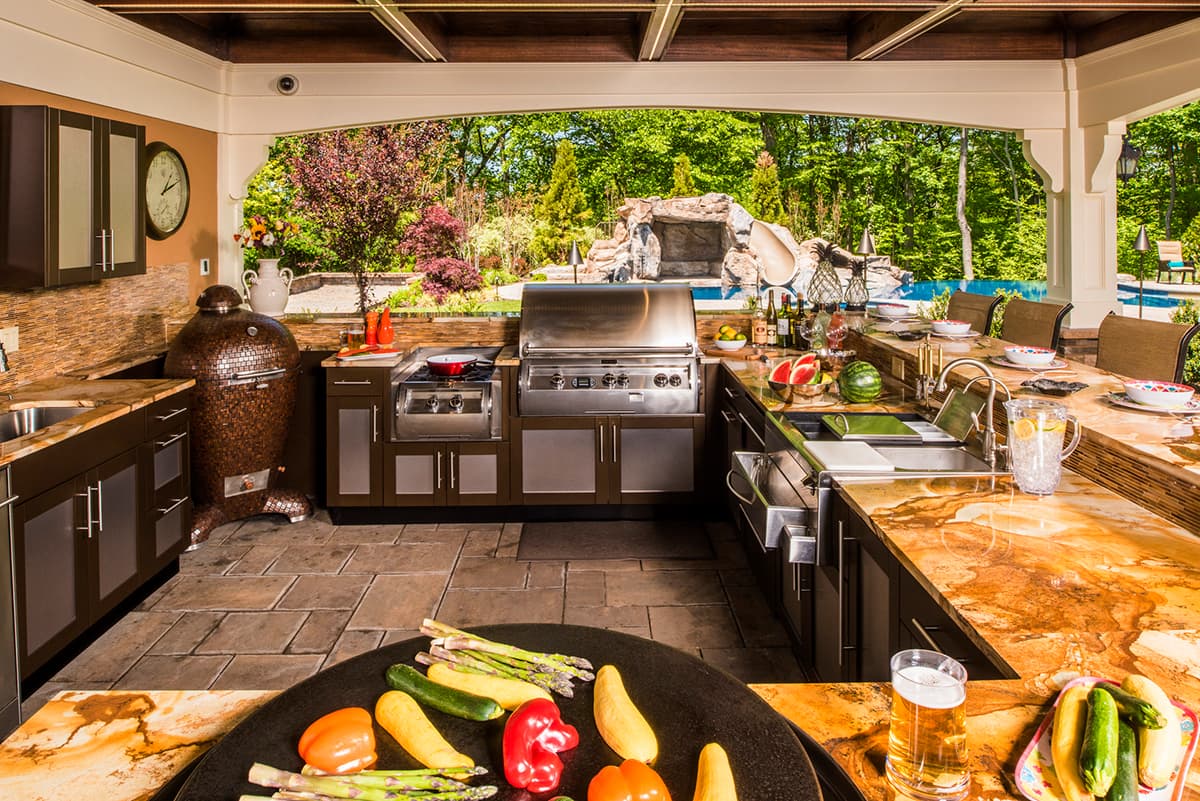
A well-designed modern outdoor kitchen begins with proper zoning. Cooking zones typically include grills, pizza ovens, or cooktops, while prep zones provide counter space and storage. Serving zones may include bar seating or pass-through counters that encourage interaction with guests.
Separating hot and cold zones improves safety and efficiency. Refrigeration units are placed away from heat sources, while prep surfaces remain close to cooking appliances to reduce unnecessary movement.
The layout should also account for traffic flow. Modern outdoor kitchens often double as entertainment spaces, so ensuring that guests can move freely without interfering with cooking tasks is essential.
Integration with Outdoor Living Areas
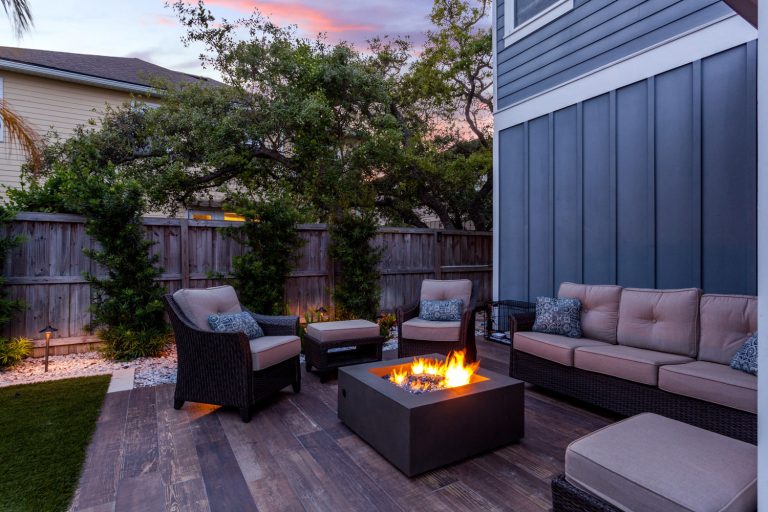
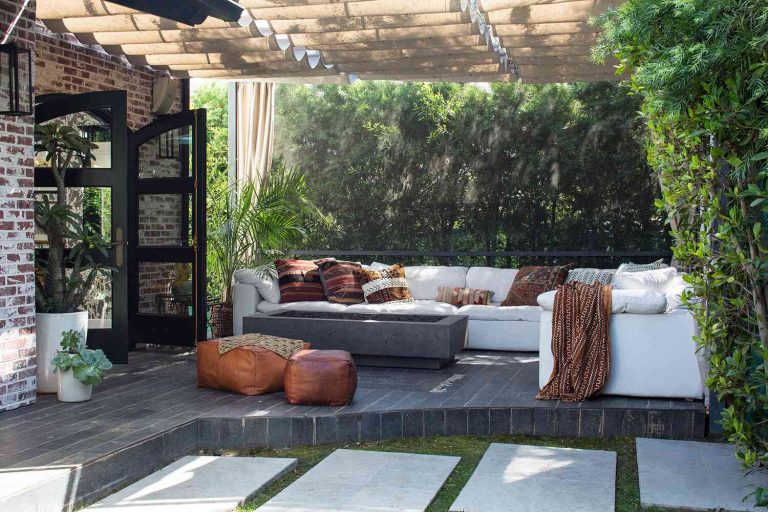
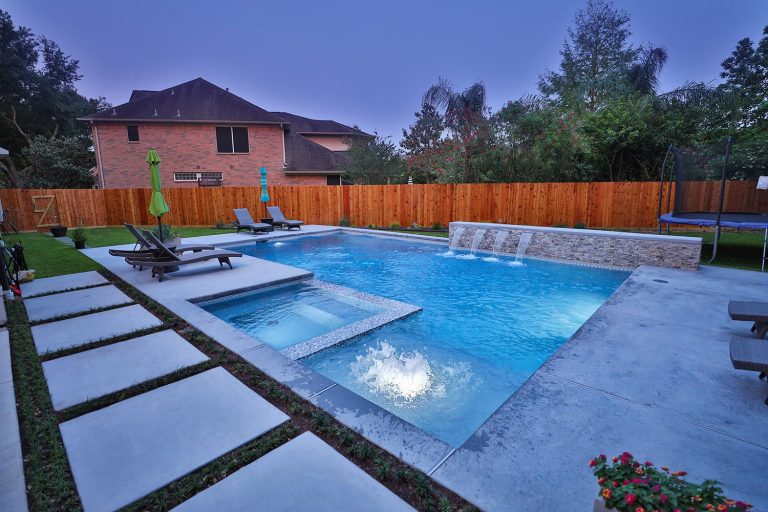
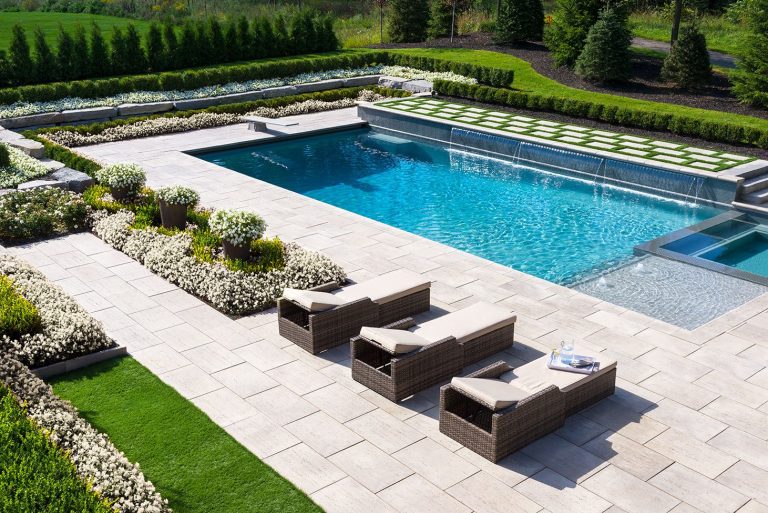
Modern outdoor kitchen design rarely exists in isolation. It is usually integrated with patios, pools, pergolas, or outdoor lounges. This integration enhances usability and creates a cohesive outdoor environment.
Designers often use visual anchors such as kitchen islands or feature walls to define the kitchen area without enclosing it. Open layouts maintain a sense of spaciousness while still providing functional boundaries.
Lighting placement is another critical factor. Task lighting supports cooking activities, while ambient lighting enhances mood and safety after sunset.
Materials Used in Modern Outdoor Kitchen Design
Durable Surfaces and Finishes

Material selection is a defining aspect of modern outdoor kitchen design. Surfaces must withstand temperature fluctuations, moisture, and UV exposure without compromising appearance.
Common countertop materials include concrete, porcelain slabs, and natural stone. These materials offer durability while maintaining a sleek, contemporary look. Cabinetry is often made from stainless steel, marine-grade polymer, or sealed hardwoods designed for outdoor use.
Flooring choices such as porcelain pavers or textured stone provide slip resistance and long-term durability, reinforcing both safety and style.
Aesthetic Consistency and Longevity
Modern design emphasizes consistency in color and texture. Neutral tones like gray, black, and beige dominate, often paired with wood or stone accents to soften the overall appearance.
Longevity is a key consideration. Materials are selected not only for their immediate visual appeal but also for how they age over time. High-quality finishes reduce maintenance requirements and preserve the kitchen’s modern character for years.
Smart Technology in Modern Outdoor Kitchen Design
Integration of Smart Appliances
Smart technology has become a defining feature of modern outdoor kitchen design. Wi-Fi-enabled grills, temperature-controlled cooktops, and app-connected smokers allow precise cooking control and monitoring.
These appliances enhance convenience by reducing the need for constant supervision. Users can adjust settings remotely or receive alerts when food reaches optimal temperature, improving cooking accuracy and reducing stress.
Smart refrigeration units help maintain consistent cooling, ensuring food safety even during extended outdoor gatherings.
Environmental Control and Automation
Automation extends beyond cooking appliances. Smart lighting systems adjust brightness based on time of day, while automated pergolas or retractable awnings respond to weather conditions.
Climate control features such as infrared heaters or misting systems improve comfort, allowing the kitchen to be used across different seasons. These technologies enhance usability while maintaining energy efficiency.
Benefits of Technology in Outdoor Kitchens
Enhanced Efficiency and Precision
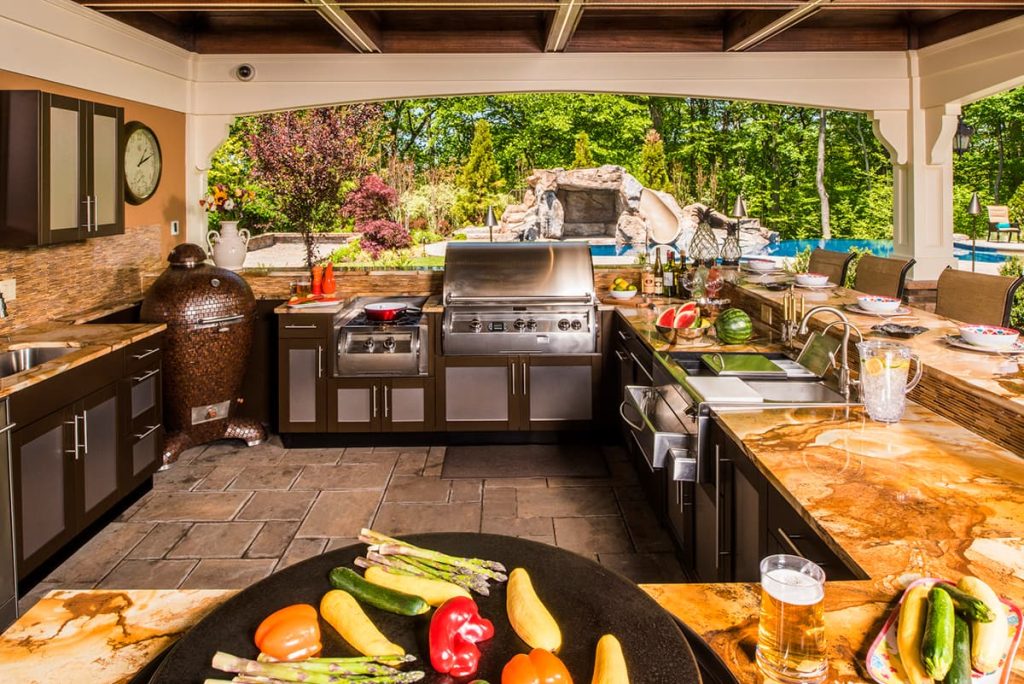
Technology improves cooking efficiency by providing precise temperature control and consistent performance. This reduces trial-and-error cooking and allows users to replicate successful results.
Automation also minimizes manual tasks, freeing time for social interaction. This aligns with the primary purpose of outdoor kitchens as entertainment-focused spaces.
Improved Safety and Reliability
Smart monitoring systems enhance safety by alerting users to potential issues such as overheating or power interruptions. This is especially valuable in outdoor environments where conditions can change quickly.
Durable, technology-enhanced appliances are designed to withstand outdoor exposure, reducing breakdowns and extending lifespan.
Real-World Example: Outdoor Kitchen Solutions
Built-In Stainless Steel Grill Station
A built-in stainless steel grill station is a cornerstone of modern outdoor kitchen design. These grills are integrated directly into custom countertops, creating a seamless and professional appearance.
Beyond aesthetics, built-in grills offer consistent heat distribution and improved durability. Their enclosed design protects internal components from weather exposure, ensuring reliable performance over time. This makes them ideal for homeowners who frequently cook outdoors and require dependable equipment.
Outdoor Pizza Oven Installation
Outdoor pizza ovens represent a growing trend in modern outdoor kitchens. Designed with clean lines and heat-resistant materials, these ovens blend functionality with visual appeal.
They allow high-temperature cooking that cannot be replicated with standard grills. This expands culinary possibilities and supports social cooking experiences, where food preparation becomes part of the entertainment.
Weatherproof Outdoor Refrigeration Unit
A dedicated outdoor refrigerator enhances efficiency by keeping ingredients and beverages within reach. Modern designs feature sealed insulation and corrosion-resistant finishes.
This eliminates repeated trips indoors and maintains food safety during extended use. It also supports an organized workflow, a key principle of modern kitchen design.
Integrated Outdoor Kitchen Island with Seating
Kitchen islands serve as multifunctional hubs in modern outdoor kitchens. They provide prep space, storage, and seating in one cohesive structure.
This design encourages interaction between the cook and guests, reinforcing the social value of the space. Islands also visually anchor the kitchen area within larger outdoor environments.
Practical Benefits of Modern Outdoor Kitchen Design
Solving Space Utilization Challenges
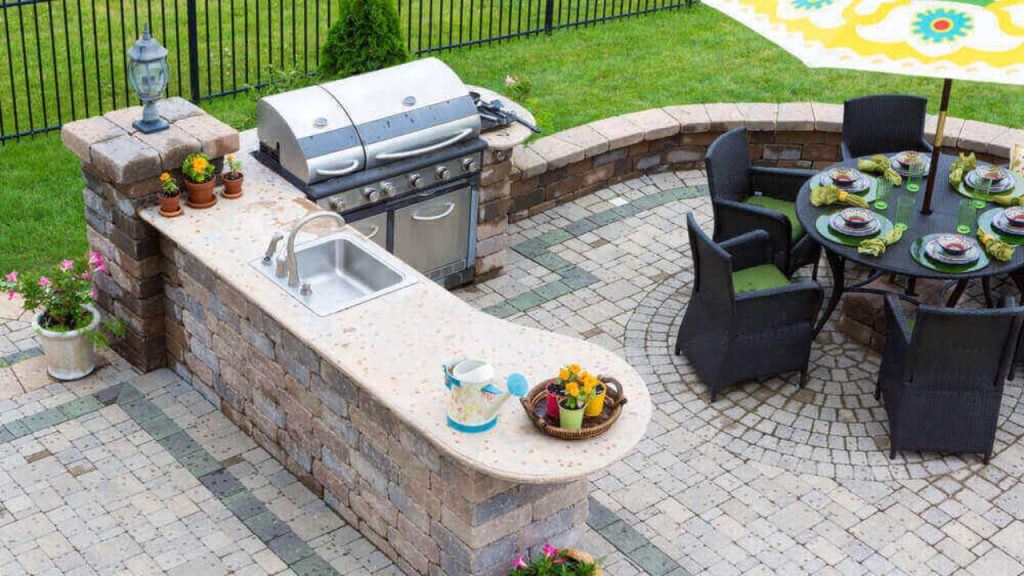
Modern outdoor kitchens solve the problem of underutilized backyard space. By transforming unused areas into functional cooking environments, homeowners gain additional living space without expanding the home’s footprint.
Thoughtful layouts maximize efficiency, ensuring that every square meter serves a purpose. This is particularly valuable for urban or compact outdoor spaces.
Enhancing Lifestyle and Entertainment
Outdoor kitchens improve lifestyle quality by encouraging outdoor activity and social interaction. They support casual meals, celebrations, and family gatherings in a relaxed environment.
Modern design elements enhance comfort and usability, making outdoor cooking as convenient as indoor alternatives while offering a unique experience.
Increasing Long-Term Property Value
A well-designed modern outdoor kitchen adds lasting value to a property. Durable materials and timeless design ensure that the space remains attractive to future occupants.
The combination of aesthetics, functionality, and technology makes modern outdoor kitchens a desirable feature in contemporary housing markets.
Use Cases and Real-Life Applications
Modern outdoor kitchen design is particularly useful for households that enjoy entertaining. It solves the problem of overcrowded indoor kitchens during gatherings by shifting cooking and social activities outdoors.
Families benefit from improved meal preparation flow, especially during warmer seasons. Outdoor kitchens also support healthier lifestyles by encouraging fresh cooking and outdoor engagement.
In climates with extended warm seasons, modern outdoor kitchens function as primary cooking spaces, reducing indoor heat buildup and energy consumption.
Frequently Asked Questions
What defines a modern outdoor kitchen design?
A modern outdoor kitchen design is defined by clean aesthetics, functional layouts, durable materials, and integration of smart technology. It emphasizes efficiency, comfort, and seamless connection with outdoor living spaces.
Are modern outdoor kitchens suitable for all climates?
Yes, modern outdoor kitchens are designed with weather-resistant materials and climate control features. Proper planning allows them to function effectively in both warm and cooler environments.
How does technology improve outdoor kitchen usability?
Technology improves usability by enhancing precision, safety, and convenience. Smart appliances, automated lighting, and climate control systems allow users to enjoy outdoor cooking with minimal effort and greater reliability.