Outdoor Dining Furniture Trends Shaping Modern Outdoor Living Spaces
Outdoor dining furniture trends are evolving rapidly as homeowners, designers, and hospitality professionals rethink how outdoor spaces are used. No longer limited to occasional summer meals, outdoor dining areas are now designed as functional extensions of indoor living spaces. This shift has driven demand for furniture that blends durability, comfort, and aesthetic appeal while adapting to changing lifestyles and climates.
Modern outdoor dining furniture reflects broader design movements such as minimalism, sustainability, and multifunctionality. Consumers now expect outdoor pieces to match the sophistication of indoor furniture while withstanding environmental exposure. As a result, manufacturers are investing in advanced materials, modular designs, and smart construction techniques that support long-term usability.
The Rise of Indoor-Outdoor Design Continuity
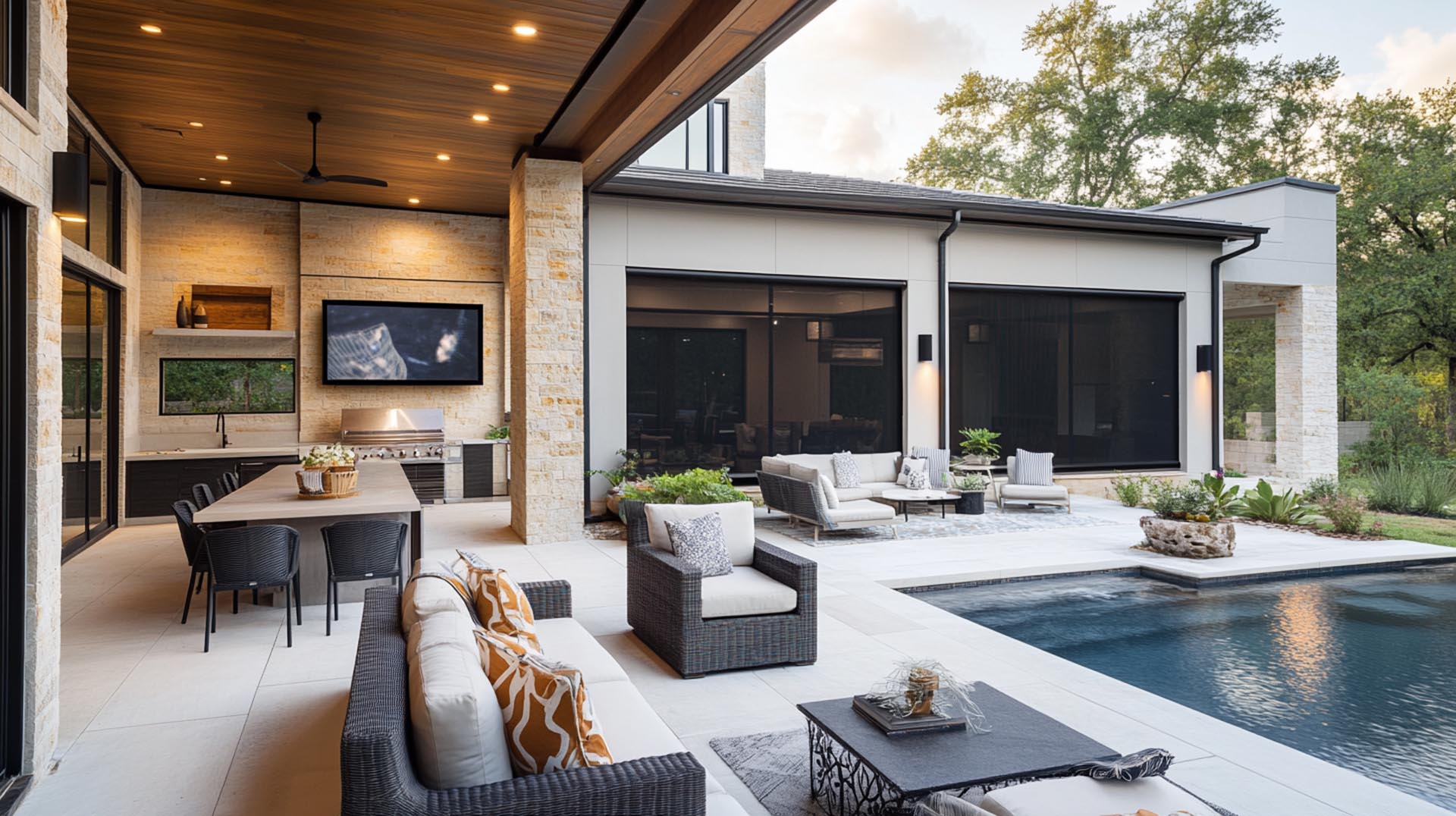
One of the strongest outdoor dining furniture trends is the seamless visual connection between indoor and outdoor spaces. Dining tables, chairs, and benches are increasingly designed to mirror indoor styles, making patios and gardens feel like natural extensions of the home. This continuity creates a cohesive aesthetic that enhances the overall living experience.
Designers are focusing on neutral color palettes, clean lines, and refined textures that transition smoothly from interior dining rooms to outdoor terraces. Materials such as engineered wood finishes, powder-coated aluminum, and woven composites help maintain visual harmony while delivering outdoor performance.
This trend also supports year-round use of outdoor dining areas. When furniture looks and feels like indoor pieces, homeowners are more likely to invest in lighting, heating, and weather protection that extends the usability of outdoor spaces beyond seasonal limits.
Advanced Materials Driving Durability and Style
Material innovation plays a central role in shaping outdoor dining furniture trends. Traditional materials such as untreated wood or basic plastic are being replaced by engineered alternatives that offer superior resistance to moisture, UV exposure, and temperature fluctuations.
High-performance materials like teak alternatives, sintered stone tabletops, and weather-resistant rope weaves provide durability without sacrificing style. These materials allow for thinner profiles and sleeker designs, making outdoor dining sets appear lighter and more contemporary.
Another key development is the use of mixed materials within a single piece. Combining metal frames with wood-look surfaces or fabric elements adds visual depth and structural strength. This layered approach enhances both functionality and design appeal, making furniture suitable for diverse outdoor environments.
Sustainability as a Core Design Principle
Sustainability has become a defining factor in outdoor dining furniture trends. Consumers are increasingly conscious of environmental impact and expect outdoor products to align with eco-friendly values. This has led to greater use of recycled materials, responsibly sourced wood, and low-impact manufacturing processes.
Manufacturers are responding by developing furniture that lasts longer and requires fewer replacements. Longevity itself is a sustainability feature, reducing waste and resource consumption over time. Modular construction also allows damaged components to be replaced without discarding the entire piece.
Eco-conscious design does not compromise aesthetics. Many sustainable materials now replicate the look of natural wood or stone while offering improved performance. This balance of responsibility and beauty is redefining expectations for outdoor dining furniture.
Comfort-Focused Ergonomic Design
Comfort has moved to the forefront of outdoor dining furniture trends as outdoor meals become longer and more social. Chairs are now designed with ergonomic back support, flexible seating surfaces, and cushioned elements that enhance comfort without excessive bulk.
Dining chairs with contoured seats and breathable materials help maintain comfort in warm climates. Adjustable features, such as reclining backs or flexible frames, allow users to customize seating positions based on preference and activity.
Comfort also extends to table height and spacing. Designers are paying closer attention to proportions that support relaxed dining and conversation. These improvements make outdoor dining furniture suitable for both casual meals and extended gatherings.
Smart Features and Technology Integration
Technology is subtly influencing outdoor dining furniture trends through features that enhance convenience and longevity. While furniture itself remains primarily physical, integrated solutions are becoming more common in premium designs.
Examples include built-in cable management for outdoor lighting, UV-resistant coatings that reduce heat absorption, and quick-dry cushion technologies. Some dining tables incorporate discreet power access for outdoor work or entertainment setups, reflecting the multifunctional nature of modern outdoor spaces.
These technological advancements improve the user experience without overwhelming the design. The goal is to support modern lifestyles while preserving the simplicity and elegance of outdoor dining environments.
Modular and Space-Adaptive Solutions
Outdoor dining furniture trends increasingly emphasize flexibility, particularly for urban homes and smaller outdoor areas. Modular dining sets allow users to reconfigure layouts based on guest count or activity type, maximizing the usability of limited space.
Extendable dining tables are especially popular, offering compact daily use with the option to expand for larger gatherings. Stackable or foldable chairs provide convenient storage without sacrificing design quality.
This adaptability supports diverse use cases, from intimate family meals to social events. It also makes outdoor dining furniture more practical for evolving household needs, ensuring long-term relevance.
Real-World Example: Teak-Inspired Aluminum Dining Set
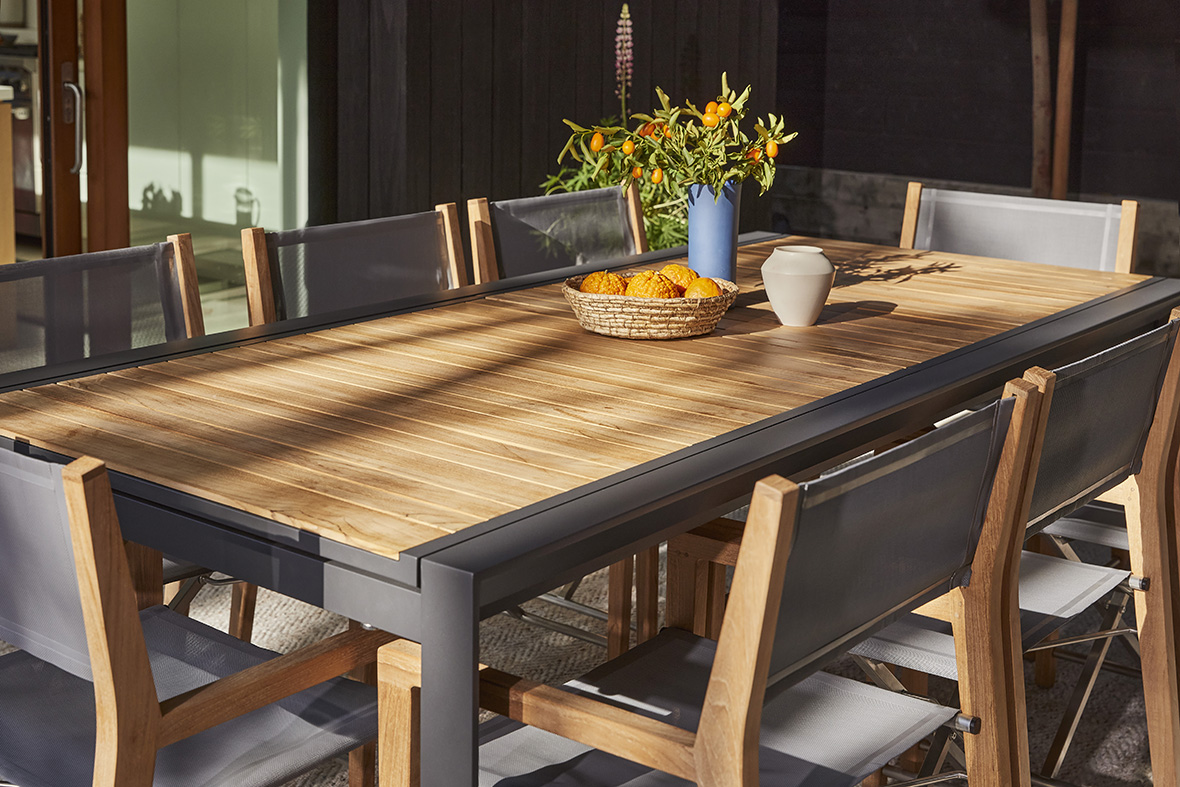
A teak-inspired aluminum dining set exemplifies how outdoor dining furniture trends merge classic aesthetics with modern performance. These sets replicate the warm appearance of natural teak while using lightweight aluminum frames that resist corrosion and require minimal maintenance.
The relevance of this design lies in its ability to deliver visual elegance without the upkeep associated with real wood. The aluminum construction ensures structural stability, while wood-grain finishes maintain a natural look suitable for upscale outdoor spaces.
This type of dining set is ideal for environments exposed to humidity or coastal conditions, demonstrating how material innovation addresses real-world challenges while supporting contemporary design preferences.
Real-World Example: Sintered Stone Outdoor Dining Table
Sintered stone dining tables are gaining attention within outdoor dining furniture trends due to their exceptional durability and refined appearance. These surfaces resist scratches, stains, and extreme temperatures, making them suitable for outdoor dining year-round.
The stone-like texture adds sophistication to outdoor spaces, elevating the dining experience. Unlike natural stone, sintered surfaces are engineered for consistency and performance, reducing the risk of cracking or fading.
This example highlights how advanced materials enhance both practicality and aesthetics, supporting long-term use in diverse outdoor conditions.
Real-World Example: Rope-Weave Dining Chair Systems
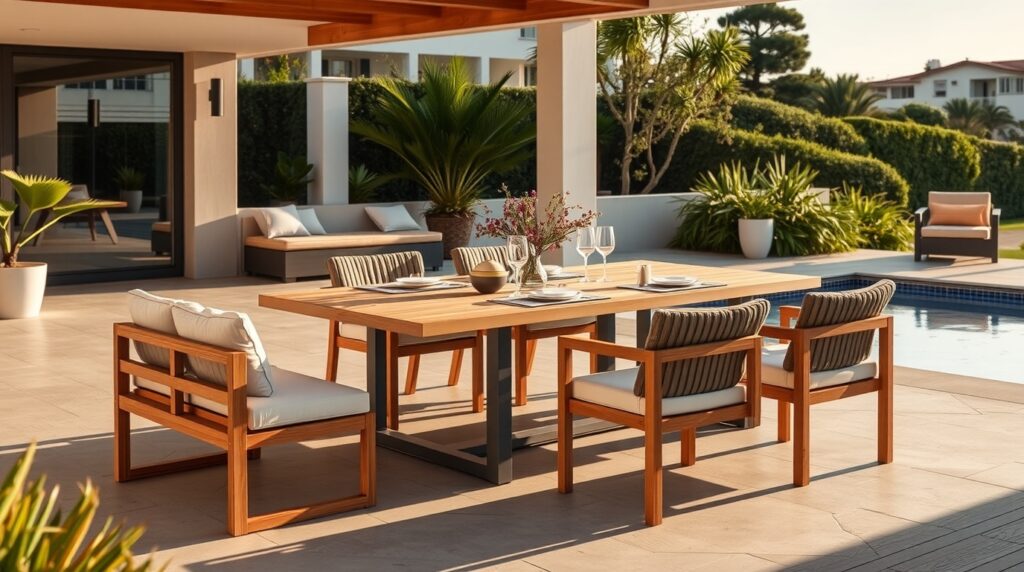
Rope-weave dining chairs represent a blend of traditional craftsmanship and modern material science. Using synthetic fibers designed for outdoor exposure, these chairs offer flexibility, breathability, and visual texture.
The woven structure adapts to the user’s body, providing comfort without heavy cushioning. This makes them particularly suitable for warm climates where airflow is essential.
These chairs demonstrate how outdoor dining furniture trends prioritize comfort and durability while introducing artisanal design elements that enhance visual appeal.
Real-World Example: Expandable Outdoor Dining Tables
Expandable outdoor dining tables address the growing demand for space-adaptive solutions. These tables feature concealed extension mechanisms that allow users to increase seating capacity when needed.
The relevance of this design lies in its practicality. Homeowners can maintain a streamlined layout for everyday use while accommodating larger gatherings without additional furniture.
This solution reflects modern outdoor living patterns, where flexibility and efficiency are essential.
Practical Benefits of Modern Outdoor Dining Furniture
The benefits of current outdoor dining furniture trends extend beyond appearance. Improved materials reduce maintenance demands, saving time and resources over the lifespan of the furniture.
Enhanced comfort encourages longer use, supporting social interaction and relaxation. When outdoor dining furniture is comfortable and inviting, outdoor spaces become central to daily life rather than occasional settings.
Sustainability-focused designs also contribute to environmental responsibility, aligning personal lifestyle choices with broader ecological goals.
Real-Life Use Cases and Problem Solving
Outdoor dining furniture trends address common challenges faced by homeowners and businesses. Weather resistance solves issues related to deterioration, ensuring furniture remains functional despite exposure to sun and rain.
Space-adaptive designs help maximize limited outdoor areas, particularly in urban settings. Modular layouts allow users to adjust configurations based on changing needs.
Comfort-oriented features reduce physical strain during extended use, making outdoor dining more inclusive for all age groups. These solutions enhance usability and overall satisfaction.
Long-Term Value and Lifestyle Impact
Investing in trend-driven outdoor dining furniture enhances property value by improving outdoor aesthetics and functionality. Well-designed outdoor dining areas are increasingly viewed as essential living spaces rather than optional extras.
The lifestyle impact is equally significant. Outdoor dining encourages social engagement, healthier living through outdoor activity, and stronger connections with nature.
By aligning design, comfort, and durability, modern outdoor dining furniture supports meaningful everyday experiences.
Frequently Asked Questions
What defines current outdoor dining furniture trends?
Current trends focus on durability, comfort, sustainability, and design continuity between indoor and outdoor spaces. Advanced materials and modular solutions play a key role.
Why are mixed materials popular in outdoor dining furniture?
Mixed materials combine aesthetic appeal with performance benefits. They allow designers to balance strength, comfort, and visual interest while addressing environmental challenges.
How do outdoor dining furniture trends improve usability?
Modern trends improve usability through ergonomic design, flexible layouts, and weather-resistant materials that support frequent, long-term use.